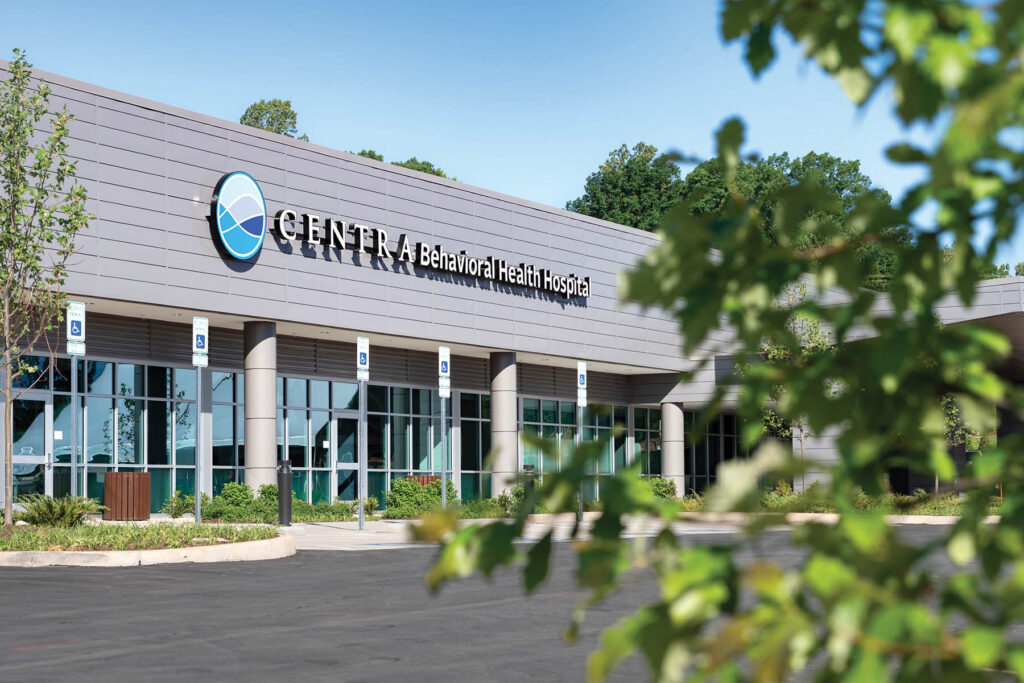
Several months into operations, Centra Behavioral Health Hospital is adding capacity to Lynchburg’s mental health care system while bringing roughly 160 full-time jobs and new treatment options to the region.
By Aila Boyd | Photos courtesy of Centra
The 61,000-square-foot, 72-bed hospital at the Simons Run Medical Campus represents a 25% increase in Centra’s behavioral health capacity. Purpose-built for behavioral health care, the facility replaces the inpatient setting previously housed at Centra Virginia Baptist Hospital and represents one piece of a broader investment in the health system’s Lynchburg-area infrastructure.
The Simons Run Medical Campus represents more than $100 million in investment and includes both Centra Behavioral Health Hospital and Centra Rehabilitation Hospital. The projects are part of Centra’s multiyear modernization plan, described by the organization as the largest facilities and technology investment in its nearly 40-year history.
For Centra, the investment comes as demand for mental health services has grown both locally and nationally.
Centra said demand has increased significantly since the COVID-19 pandemic. Behavioral health has also consistently been identified as a top priority through the health system’s Community Health Needs Assessment, which it conducts every three years.
The new hospital was developed to respond to that need by increasing inpatient capacity, modernizing the treatment environment and strengthening long-term access to behavioral health services.
“The opening of Centra Behavioral Health Hospital represents a meaningful step forward for our community,” Richard Tugman, president and CEO of Centra, said at the time of the hospital’s completion. “By expanding access to specialized behavioral health services, we are directly addressing a longstanding need across central Virginia. It reflects our commitment to ensuring patients and families can access high-quality care close to home.”
That expansion goes beyond the number of available beds.
The hospital was designed specifically around behavioral health treatment, allowing Centra to offer an environment and resources that were not available in its previous inpatient setting. The facility includes six secure outdoor spaces, a fitness center, dining hall and dedicated activity therapy program. Centra also said the hospital incorporates technology intended to enhance patient safety while supporting clinical teams.
The hospital currently provides acute inpatient behavioral health care for adults and geriatric patients experiencing conditions including depression, anxiety, post-traumatic stress disorder, bipolar disorder, psychosis, personality disorders, and co-occurring substance use concerns. Centra also plans to expand inpatient services to children and adolescents.
The hospital has also been licensed to provide partial hospitalization and intensive outpatient programs. At the time Centra provided information to Lynchburg Business magazine, those services were expected to begin later in the fall.
The programs are intended to broaden the continuum of care by providing treatment options for patients who may not require hospitalization as well as those who need continued support after leaving inpatient care.
As the hospital expands behavioral health services, it is also adding to Lynchburg’s health care workforce.
Centra expects the facility to employ around 160 full-time employees, with registered nurses and behavioral health technicians making up the largest share. The workforce also includes master’s-prepared mental health therapists, social workers, psychiatric providers, and employees in support departments such as the business office and medical records.
Recruitment has generated strong interest, according to Centra, although the organization says some clinical positions remain more competitive to fill. Experienced behavioral health nurses and clinicians who support overnight assessments have been among the more challenging positions to recruit.
As operations grow, Centra said it is taking a measured approach to staffing.
“Our focus is not simply on how quickly we can grow, but on recruiting and retaining a strong team, supporting work-life balance, and building a culture that allows our employees to provide high-quality care for the long term,” Centra said
in written responses provided to Lynchburg Business magazine.
The hospital itself represents a partnership between Centra and Lifepoint Behavioral Health, an operating division of Lifepoint Health.
Centra maintains a 51% stake in its partnerships with Lifepoint for both the behavioral health and rehabilitation hospitals. Employees at the hospitals are employed through Lifepoint, while providers remain Centra Medical Group employees. Many caregivers who previously worked in the behavioral health unit at Virginia Baptist Hospital chose to transfer their employment to work at the new facility.
Lifepoint Behavioral Health manages the hospital’s day-to-day operations. The partnership combines Centra’s regional presence with Lifepoint’s experience operating behavioral health facilities.
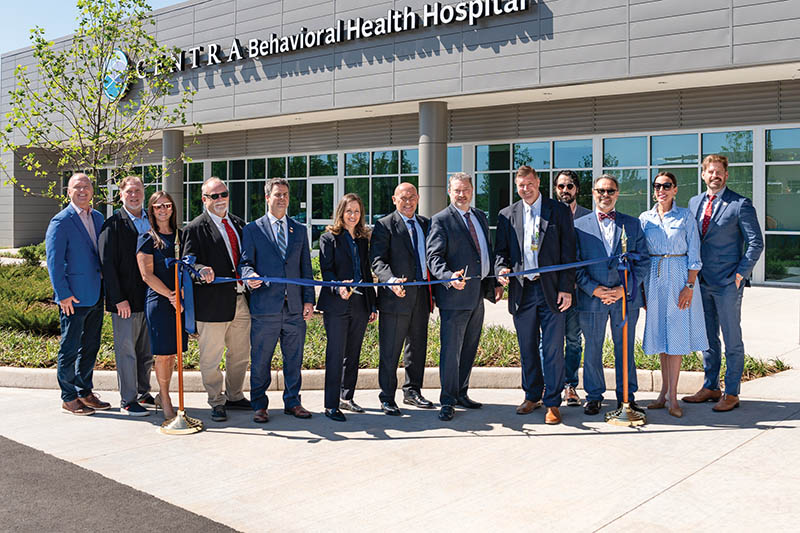
“We know we are stronger through partnership, and we are proud to work alongside a patient-focused community health system like Centra as they realize their vision to make care more accessible, coordinated and community driven,” Nicki Tessler, president of Lifepoint Behavioral Health, said at the hospital’s ribbon cutting.
Although the hospital is located in Lynchburg, its intended reach extends beyond the city. Centra said the facility was developed to increase access for Lynchburg and the surrounding region, with the ability to serve patients and referral partners throughout Central and Southern Virginia.
As the hospital moves beyond its opening months, Centra plans to measure the success of the investment through access, quality, and patient outcome data.
Metrics will include referral and acceptance rates, the time between referral and admission, length of stay, readmissions, patient experience, safety indicators, and successful connections to follow-up care after discharge. Centra will also look at whether the additional inpatient capacity reduces the number of behavioral health patients waiting in emergency departments for placement and the need to send patients outside the region for care.
For Centra, those measures will ultimately determine whether the investment is accomplishing what the health system set out to do.
“Ultimately, success isn’t simply filling 72 beds,” Centra said. “It’s being able to show through the data that people are accessing the right level of behavioral health care faster, closer to home, and with better outcomes.”