Appomattox Plans New Chapter
By: Brittney Kay | Photos By: Brooke Moore
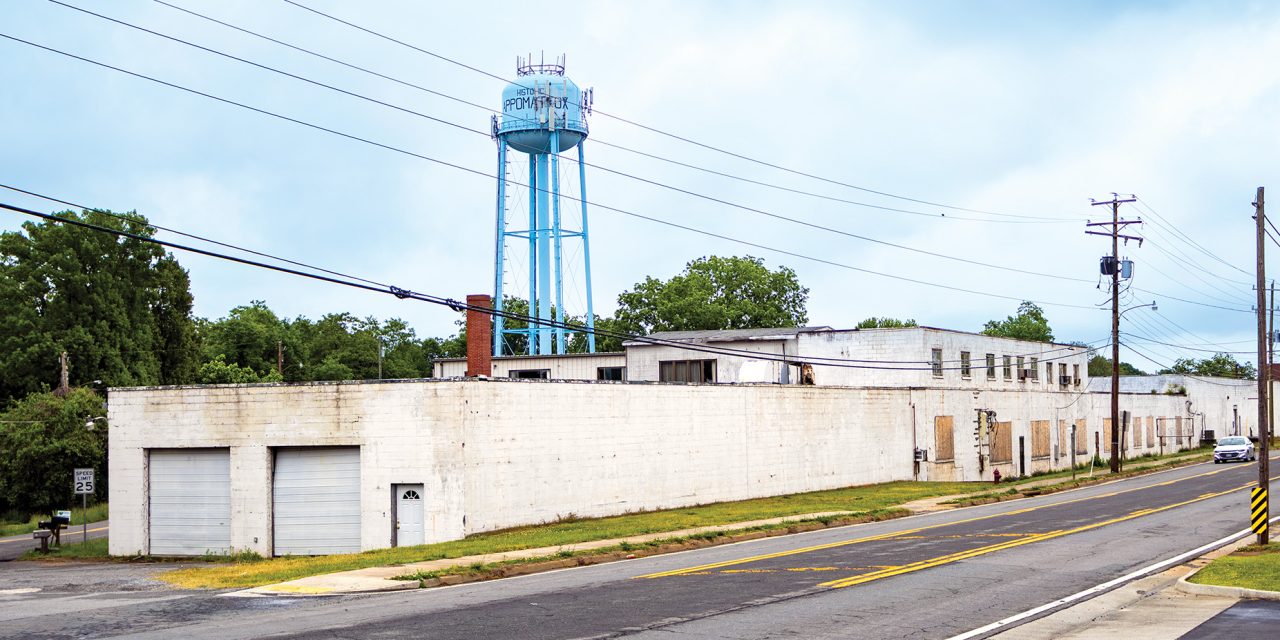
Just under 25 miles east of Lynchburg, the town of Appomattox is known for its historical significance, small-town charm, and close-knit community. For more than two decades, however, one property has stood in contrast to that image.
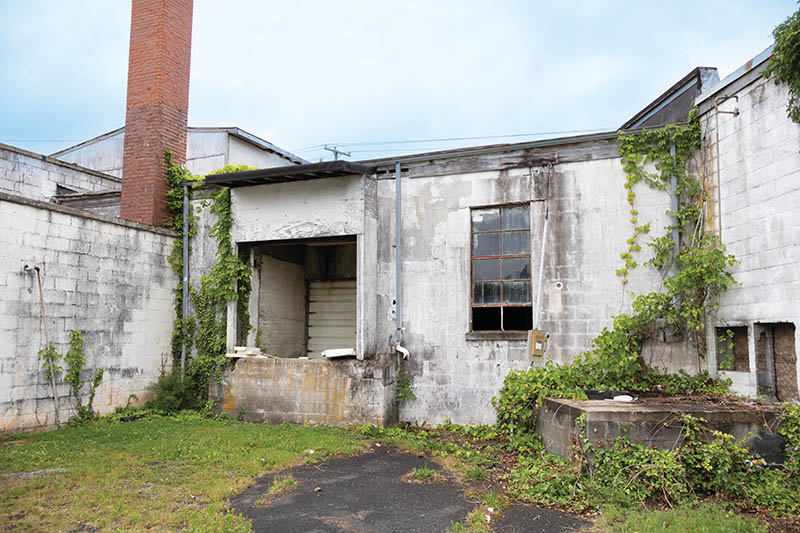
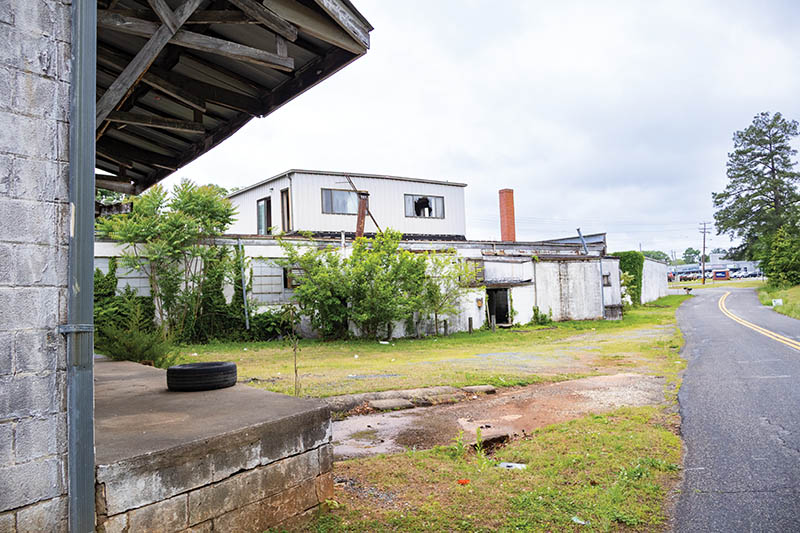
The former Courtland Manufacturing building, once part of the town’s industrial fabric, has sat vacant since 2000—an aging structure with no viable commercial future and the added complication of asbestos.
Now, that long-neglected site is set to become something new: workforce housing designed to serve the very community that has grown around it.
The building, which dates back to the 1940s when it operated as Courtland Manufacturing, remained in use through the 1990s before briefly housing another business. Since 2000, it has stood empty. “The building has been empty and derelict for over twenty years now,” said Appomattox Town Manager Michael Campbell. “There is no renovating it or commercial use for it, unfortunately.”
For Phillip Jamerson, owner of Jamerson Real Estate, the property came as part of a larger deal. While the company specializes in residential construction, the cost of demolishing the structure made it difficult to justify moving forward independently.
When Campbell stepped into his role as town manager, he made a point to reach out to local business owners, offering support where he could and expressing a desire to build stronger partnerships within the community. Jamerson was one of those business owners, and when the challenges surrounding the former factory became clear, he took that invitation seriously.
Looking for a path forward, Jamerson approached Campbell to explore whether there might be an economic incentive to make the project viable.
Campbell, who has a background in public works and extensive experience writing grants, was eager to offer his assistance. “I have a background in public works, so I’ve done a lot of grants,” he said. “I got into contact with Virginia Housing and they saw potential.”
Through that collaboration, the project secured a $400,000 grant from Virginia Housing, with Jamerson providing the required 25 percent local match. The funding will allow for the demolition of the existing structure and the phased development of new housing on the site over the next several years. The first phase is expected to begin in July of this year.
Plans for the property include multiple buildings housing approximately 40 residential units. Separate buildings will be constructed for two- and three-bedroom units, with the first phase expected to deliver initial housing within the next year. As development continues, the project aims to provide not just housing, but also stability for members of the local workforce who help sustain the community’s day-to-day life. All units are expected to be completed within the next few years.
Unlike traditional subsidized housing, the development falls under the category of workforce housing, designed to serve individuals and families who earn too much to qualify for assistance but still face challenges finding affordable options in the current market.
In communities like Appomattox, that gap has become increasingly difficult to navigate. Many working individuals, such as teachers, service workers, and skilled laborers, often find themselves priced out of market-rate housing while still earning too much to qualify for traditional assistance programs. Developments like this are intended to help bridge that gap, offering attainable options for those who live and work in the community.
Eligibility will be based on Area Median Income (AMI), with projected qualifying incomes ranging roughly from $30,000 to $80,000 depending on household size.
Monthly rent is expected to fall between $1,000 and $1,200, with utilities included. This added benefit helps provide predictability for residents managing tight budgets.
The units themselves are designed with practicality and livability in mind. Plans call for both upper and lower-level units rather than traditional townhome-style layouts—a feature that may appeal to retirees or others who prefer to avoid stairs. Each unit will also include appliances, as well as in-unit washers and dryers, offering a level of convenience not always found at this price point.
For Campbell, the project represents more than just another completed grant. “I’ve done over a dozen grants, but I am most excited for this one,” he said. “It is a privilege to be part of providing housing for the working people of Appomattox.”
As the long-vacant site prepares for demolition and redevelopment, the transformation of the former factory signals a shift not just in land use, but also in purpose.
It turns a lingering reminder of the past into an investment in the town’s future. What once stood as an eyesore may soon become a place where families can settle, grow, and continue to be part of the community they help sustain.