Hermle North America Carries on Production of Unique Martinsville Speedway Trophy
By: Shannon Kelly | Photo courtesy: Hermle North America
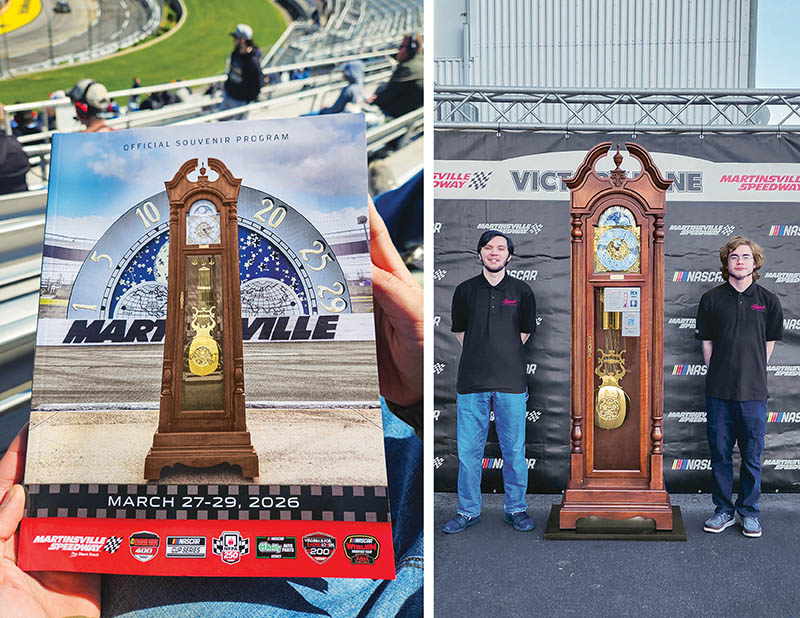
Martinsville Speedway founder H. Clay Earles did not want to give out another empty cup to winners of races at the speedway that would collect dust; he wanted something unique and something that would last—something that could be an heirloom, a trophy that could be enjoyed by more than its winner alone. From this idea, according to NASCAR’s official website, sprang the one-of-a-kind trophy Martinsville Speedway is known for: a traditional grandfather clock.
After losing its original clockmaker to a company closure, the speedway found a new manufacturer—and family-owned business—to fill the gap close to home.
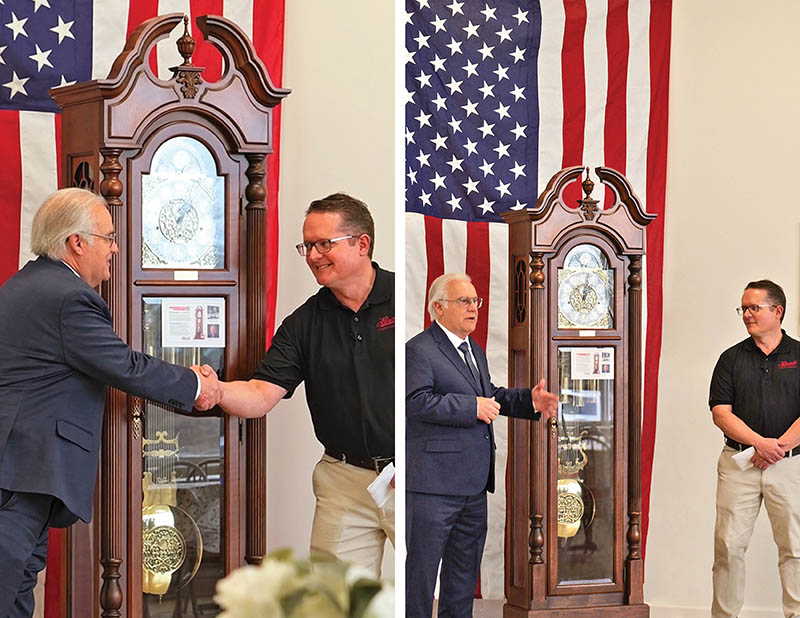
The family-owned German clockmaking company Hermle, through its Amherst-based operation, is the new maker of Martinsville Speedway’s traditional grandfather clock trophy, which is presented to the winners of various races held at the NASCAR track in Southside Virginia.
Founded in 1922, Hermle established a U.S. location in the late 1970s, selecting Amherst not just for its convenient access to infrastructure, but also for its landscape reminiscent of the southern Germany countryside, according to Hermle’s official website.
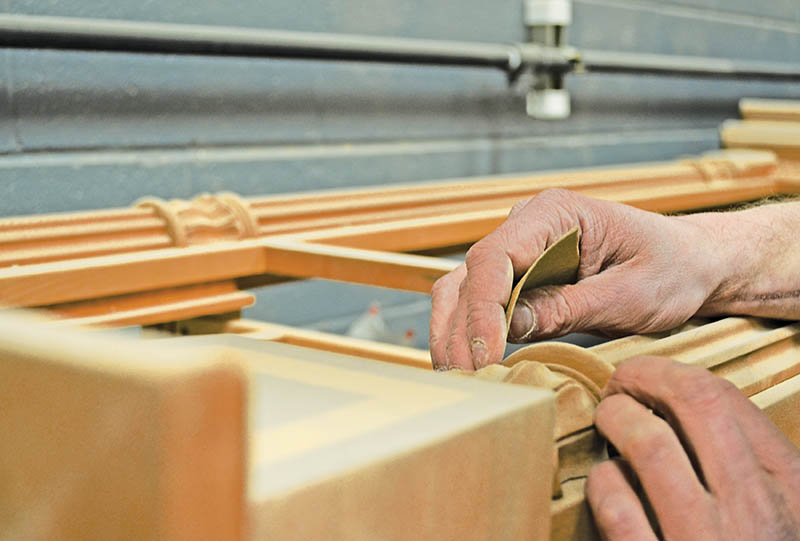
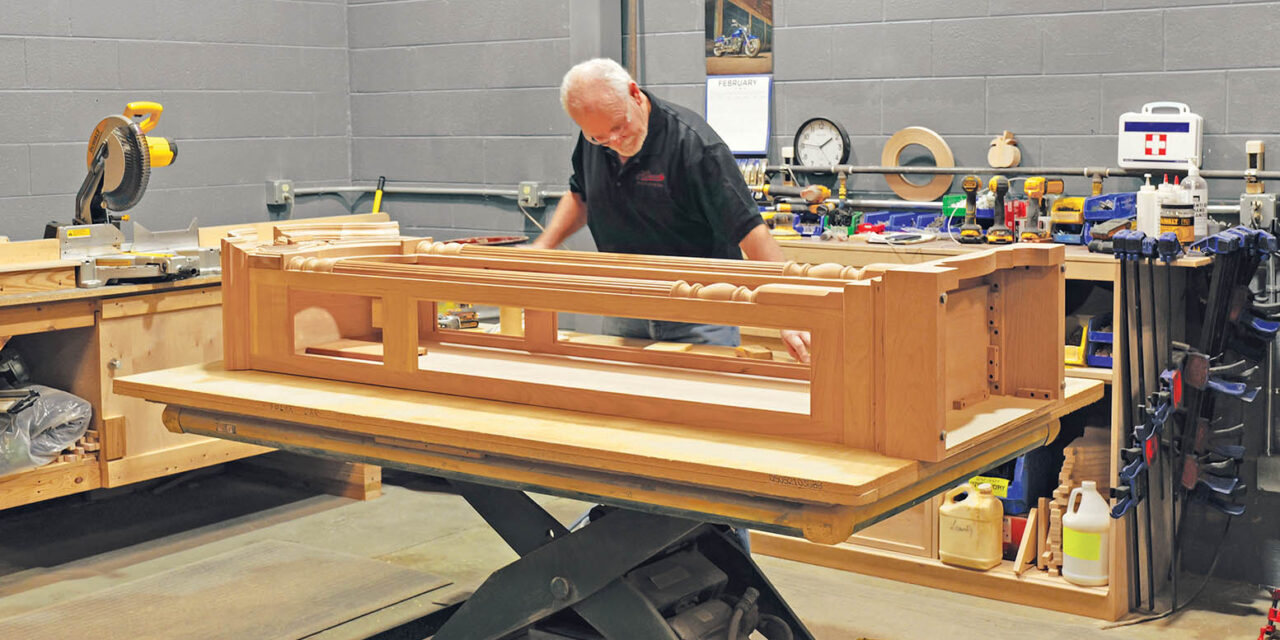
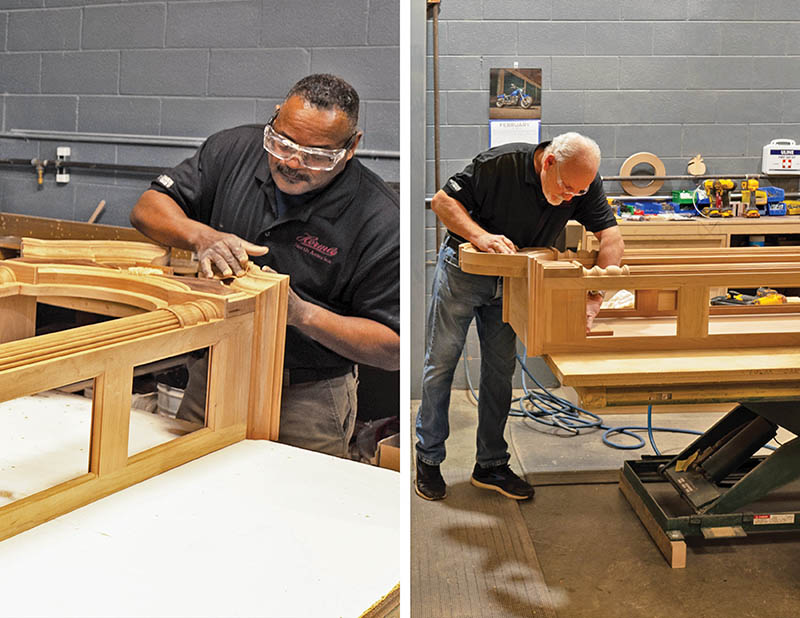
Hermle North America, which employs around 40 local workers on average, builds the frames for Hermle’s clocks, doing all the woodworking in Amherst. When the other timekeeping pieces—glass and metalworks components—come in from the German headquarters, the Amherst facility carefully fits everything together into the meticulously finished product.
The clockmaking industry is relatively small and has dwindled over the past few decades alone, so Hermle heard about the impending closure of the Martinsville clock’s original manufacturer, Ridgeway (a subsidiary of Howard Miller) before it became widespread public knowledge. Bearing that in mind, those in the know understood that Martinsville Speedway would need to find a new clockmaker to carry on the grandfather clock trophy tradition.
It did not take a long or hard search to find a new manufacturer to keep the tradition alive.
A Hermle colleague happened to be longtime friends with Clay Campbell, owner of Martinsville Speedway, and through this mutual connection, Hermle soon found itself the new maker of the trophy clocks.
Part of what made the new partnership meaningful were the shared core values of tradition and family.
“It kind of fits,” said Chad Eby, CEO of Hermle North America, “because we’ve been around for a long time, in Germany since 1922, here since 1976. But the tradition of this, of NASCAR using this clock at the Martinsville Speedway, is also all about tradition, so we wouldn’t pick and design an ultra-modern looking clock for this. It has to be a traditional design that has been around for a long time, and so when we looked at our clocks, we didn’t really design a specific clock for Martinsville. We just picked the one we kind of thought fit the need the best from our current line, and went with this one.”
Martinsville Speedway not only has a U.S.-based manufacturer for the trophy, but a Virginia-based one.
“As far as the company is concerned, both here and in Germany, it does kind of just excite the workforce to know that we’re serving a really unique customer, and it’s just a source of pride, basically, because this trophy, in the racing world, is definitely unique,” Eby said. “I mean, nobody else has a trophy anywhere near this.”
Prior to 2007, Eby said the Amherst location specialized in metalworking, producing the other mechanisms necessary for the timekeeping devices: movement pieces, weights, the pendulum, dials and such. By 2007, however, the metalworking switched back to the Germany headquarters, and Amherst became Hermle’s woodworking and assembly hub.
Many of the original employees from that transition period came over from a former furniture company, bringing a foundation in woodworking with them. Since then, a number of workers have come and gone, all being trained on the job.
The Martinsville Speedway trophy clocks are made of cherry wood: a classic, popular choice for the grandfather clock.
Working with the wood used to make Hermle’s clocks is both rewarding and challenging in its own ways, Eby said. The rough-cut lumber used—sourced mainly from the East Coast—is essentially living wood.
“…The tree might have gotten cut down, and it was machined, and it was kiln-dried and everything, but the wood is, I would say, technically still alive, because the wood—depending on the season—it gathers moisture, or it dries out, so it’s constantly in a state of moving,” Eby said. “So, you have to be able to build these things to compensate for that moving so that you don’t have joints that come apart, and anywhere where there’s two pieces of wood that come together, it’s not like you can just slather more glue on there and hope for the best. There is kind of an art form behind putting these things together and making sure that they look good for the next 50 years.”
Physics, mechanics, and art come together to create lasting, quality clocks. An eye for detail is critical for this work, said Tom Massie, a longtime employee who oversees clock assembly. Other skills can be taught hands-on.
The finished product is assembled in pieces.
It starts with the carcass of a clock, Massie said. An on-site warehouse stores the rough-cut lumber that will be turned into high-quality clocks using CNC machinery. Once the shell body is ready, the base—composed of multiple parts, such as cleats—is added on. The crown piece is assembled separately and gets added as one of the last details. Once assembly is completed, the clock goes on to finishing, where it is stained, lacquered, and has the movements added in. Each piece is painstakingly put together.
“The only thing we outsource is some of the crown molding. It’s very intricate,” Massie said. “We have a company in North Carolina that does a
lot of that for us.”
Employees typically train on the job, partly because clockmaking is a precise art that is difficult to specialize in through CTE programs and other courses.
Massie did woodworking as a hobby before joining Hermle as a temporary hire years ago, at which time the company was doing more commercial grade furniture. The work led to a full-time job, and when the company pivoted to focus primarily on clocks—a demand that increased with the closure of Howard Miller—Massie took on that new skill. He has led clock production for the last three years, and he has a couple other workers he mentors as they assist him in the assembly stage.
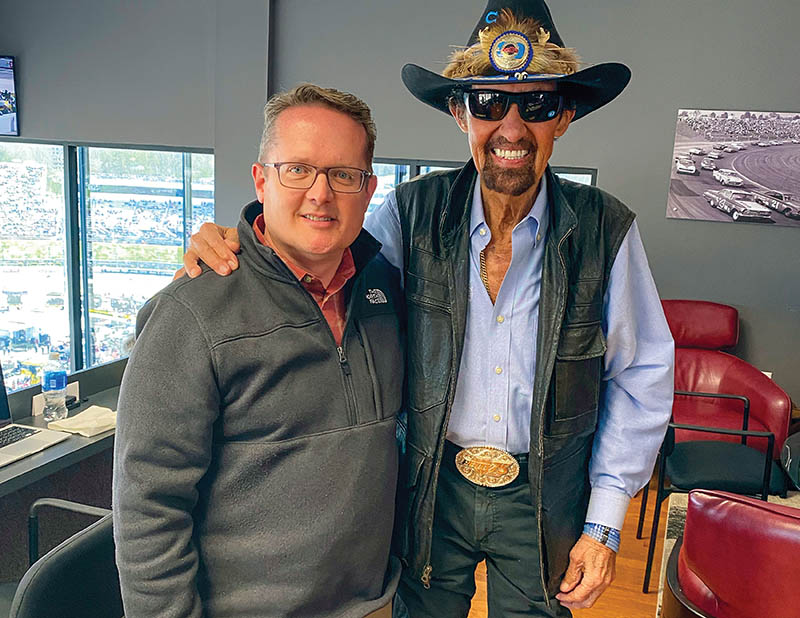
For Massie, putting the clocks together is a rewarding experience. It was a change of pace from the furniture-making he used to do.
“I enjoy doing something that’s more challenging, I guess,” Massie said. “I mean, when we were doing furniture, it’s just production. I mean, building a chest of drawers, or a nightstand, or whatever it may be, same old thing over and over, whereas the clock—the clock takes a lot longer. There’s a lot more detail, and… I find that much more interesting. It makes the time go by much faster, because you really get into making it look just perfect.”
He also enjoys mentoring others.
“It’s kind of neat to say, ‘Hey, I built that right there,’” Massie said.
Hermle makes not only grandfather clocks, but also mantle clocks and wall clocks.
Three Hermle grandfather clocks were given away as trophies for races at the Martinsville Speedway last spring, Eby said. He anticipates around eight trophy clocks per year will be required. Massie said they’ve made about 40 Martinsville clocks so far.
One new element Hermle brought to the trophy clock, Eby said, was the addition of a plaque naming it “H. Clay Earles.”
“He was the one who originally gave the clock as a trophy in the 60s, and so we wanted to honor him and the tradition that he started,” Eby said. “We renamed the clock after him, so every one of these clocks comes with a little plaque that has his name.”
Like a symbiotic relationship, the Martinsville Speedway partnership benefits Hermle as well. The company gained more interest from private customers, including NASCAR fans, team owners, and others related to the industry who want to either purchase a grandfather clock for themselves or gift them to others as a nod to the racing world.
“The sales of this clock have overall done very well since we have formed this partnership,” Eby said. “There are…individual people who are race fans who are excited about it [and] who have bought the clock, and it’s been great.”
Hermle remains, at its core, a clockmaking company, Eby said—but part of what gives it a competitive edge and has caused it to survive for 104 years and counting is that it is not afraid to diversify with changing times and markets. Flexibility and a willingness to reinvent, all while remaining true to oneself, are key ingredients to success.
“You can’t do the same thing for 104 years and think that you’re going to be successful. We’re constantly in a state of change, while keeping the clock business at our core,” Eby said. “Like I said, in Germany there’s a lot of diversification that they’ve done. They make products for different industries, and we do the same thing here, but we always remain a clock company.”